

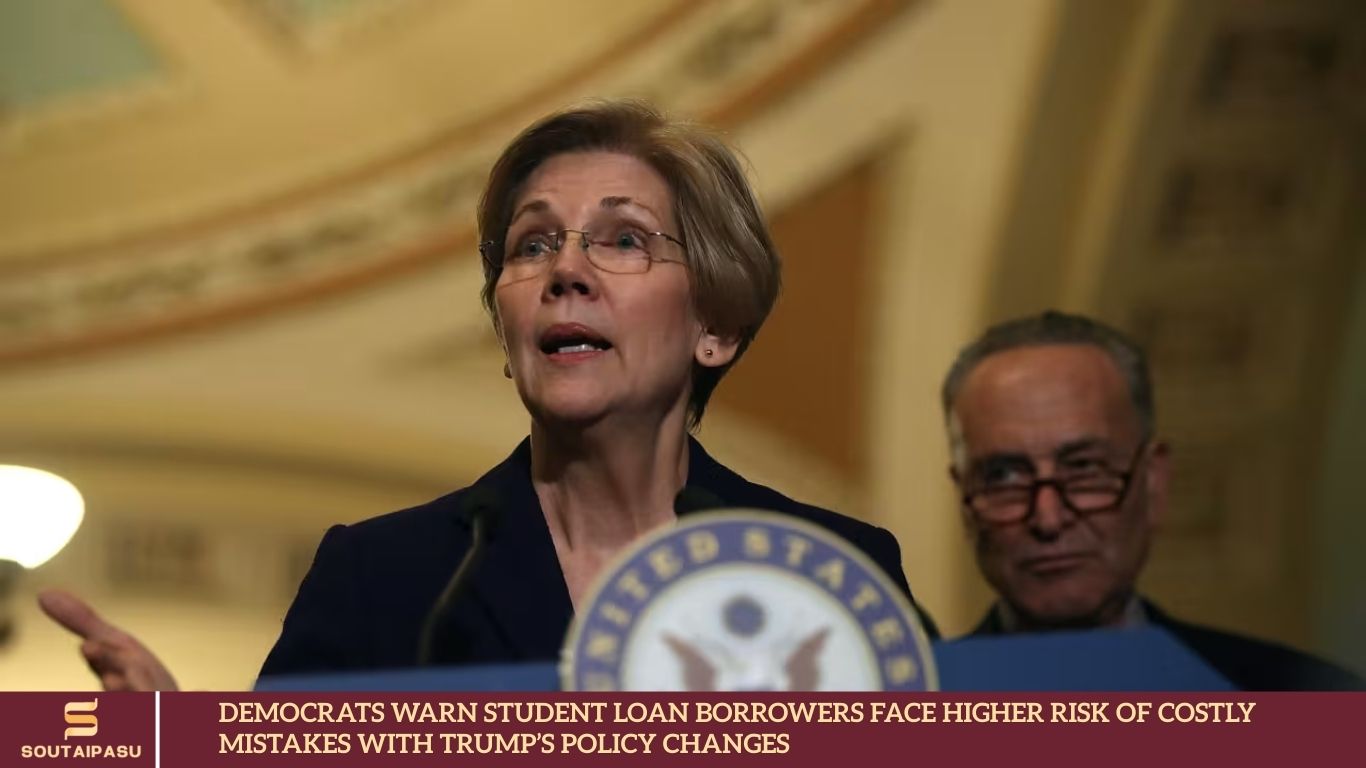
Changes to student-loan repayment are on the horizon, and Democratic lawmakers are cautioning that borrowers could face costly servicing mistakes amid the rollout.
On Sunday night, Senators Elizabeth Warren, Ed Markey, Jeff Merkley, Richard Blumenthal, Cory Booker, and Chris Van Hollen sent letters exclusively obtained by Business Insider to all five federal student-loan servicers. The letters addressed the servicers’ capacity to assist borrowers as significant repayment changes take effect.
These developments follow President Donald Trump’s “big beautiful” spending legislation, which introduced new repayment plans and borrowing caps. At the same time, collections resumed for borrowers in default after a five-year pause, even as the administration works to reduce the Department of Education’s operational oversight.
What Are Student Loans?
Student loans are funds borrowed to pay for educational expenses such as tuition, room and board, books, and other college-related costs. Unlike scholarships or grants, loans must be repaid with interest. Student loans are offered by the federal government and private lenders, each with different terms, interest rates, and repayment conditions.
Types of Student Loans
Federal Student Loans
The U.S. Department of Education issues federal loans and generally offers lower interest rates and more flexible repayment options. Examples include:
- Direct Subsidized Loans: Interest is paid by the government while the student is in school.
- Direct Unsubsidized Loans: Interest accrues while the student is in school.
- PLUS Loans: Available to graduate students and parents of undergraduate students.
Private Student Loans
Banks, credit unions, and other financial institutions offer private loans. They often have higher interest rates and fewer repayment protections compared to federal loans. Private loans may be necessary if federal aid does not cover all college costs.
Is it true that Student Loans are Forgiven After 20 Years
Yes, in some instances, student loans can be forgiven after 20 years, but it depends on the repayment plan you are on. Under federal income-driven repayment (IDR) plans, such as Income-Based Repayment (IBR) or Pay As You Earn (PAYE), any remaining loan balance may be forgiven after 20 or 25 years of qualifying payments. This forgiveness is designed to ease the burden on borrowers who make consistent payments but still have a remaining balance due to low income or high debt. However, private student loans do not offer this option, and borrowers should carefully review their repayment plan terms to understand eligibility and potential tax implications.
The Consumer Financial Protection Bureau (CFPB) also highlighted the issue in its 2024 student-loan report, noting that errors such as incorrect payment processing and difficulties reaching customer service can lead to serious downstream consequences, including late bills and housing insecurity.
With the administration halting CFPB oversight, borrowers face increased risk of being targeted by scammers posing as federal servicers, making clear, timely communication from legitimate servicers even more essential. The senators requested that servicers provide detailed responses by December 22, including data on call center volume, staffing levels, and communications to borrowers in delinquency or default.
The Consequences of Servicer Errors
Student-loan borrowers have long struggled with customer service issues. A 2023 memo from the Education Department under President Biden detailed common errors, including incorrect monthly bills, missing statements, mistakenly ending forbearance, and long wait times for customer service. These mistakes often resulted in borrowers accruing additional interest or being unable to meet their payments.
The challenges continued during the Trump administration. Democratic lawmakers warn that attempts to dismantle the Department of Education could reduce staffing and oversight, further harming borrowers. In response, the department plans to expand the ombudsman’s office to better support borrowers in managing their debt.
How Much is the Monthly Payment on a $70,000 Student Loan
Example 1: Standard 10-Year Repayment
- Loan amount: $70,000
- Interest rate: 6% (typical federal student loan rate)
- Repayment term: 10 years (120 months)
The monthly payment can be calculated using the formula for an amortizing loan: M=P(1+r)n−1r(1+r)n
Where:
- M = monthly payment
- P = loan principal ($70,000)
- r = monthly interest rate (6% ÷ 12 = 0.005)
- n = total payments (10 × 12 = 120)
Step by step:
- (1+r)n=(1+0.005)120≈1.819
- r⋅(1+r)n=0.005×1.819≈0.009095
- (1+r)n−1=1.819−1=0.819
- Divide: 0.009095÷0.819≈0.0111
- Multiply by principal: 0.0111×70,000≈777
Estimated monthly payment: $777
Example 2: 20-Year Repayment (Lower Monthly Payment)
- Same $70,000 loan at 6% over 20 years (240 months)
- (1+0.005)240≈3.312
- r⋅(1+r)n=0.005×3.312≈0.01656
- (1+r)n−1=3.312−1=2.312
- Divide: 0.01656÷2.312≈0.00716
- Multiply by principal: 0.00716×70,000≈501
Estimated monthly payment: $501
Key takeaway:
- Shorter terms = higher monthly payments but less total interest.
- Longer terms = lower monthly payments but more interest over time.
If you want, I can create a quick chart showing $70,000 loan payments at different interest rates and terms, which makes comparison super easy. Do you want me to do that?
Who is to blame for the High Student Loan Debt
The question of who is to blame for the high student loan debt in the U.S. is complex there isn’t a single culprit. Several factors and players have contributed to the problem:
- Rising College Costs – Over the past few decades, tuition and fees at both public and private colleges have increased dramatically, often outpacing inflation. Many students take loans simply because the cost of education is unaffordable without them.
- Government Policies – Federal programs that make student loans widely available have helped more students attend college, but they also contribute to higher borrowing. Policies sometimes fail to cap interest rates or incentivize cost control at schools.
- Universities and Colleges – Institutions have increasingly relied on tuition revenue to fund expansions, staff salaries, and amenities, which has driven prices up. Some critics argue schools have not done enough to control costs.
- Lenders and Financial Institutions – Private lenders profit from student loans, and their lending practices can encourage higher borrowing and repayment challenges.
- Economic Factors – Wage stagnation and rising living costs mean many graduates struggle to repay loans, magnifying the debt problem.
- Individual Borrowing Choices – While systemic factors dominate, some debt stems from students borrowing more than necessary or choosing high-cost programs without understanding long-term repayment impacts.
How Long Would it take to pay off $100,000 in a Student Loan
Scenario 1: Standard 10-Year Repayment
- Loan amount: $100,000
- Interest rate: 6% (typical federal student loan)
- Repayment term: 10 years (120 months)
Using the loan formula:M=P(1+r)n−1r(1+r)n
- Monthly interest rate r=6%÷12=0.005
- Total payments n=10×12=120
Step-by-step:
- (1+0.005)120≈1.819
- r⋅(1+r)n=0.005×1.819≈0.009095
- (1+r)n−1=0.819
- Divide: 0.009095÷0.819≈0.0111
- Multiply by principal: 0.0111×100,000≈1,110
- Monthly payment: $1,110
- Time to repay: 10 years
Scenario 2: 20-Year Repayment (Lower Monthly Payment)
- Same $100,000 loan at 6% over 20 years (240 months)
- (1+0.005)240≈3.312
- r⋅(1+r)n=0.005×3.312≈0.01656
- (1+r)n−1=2.312
- Divide: 0.01656÷2.312≈0.00716
- Multiply by principal: 0.00716×100,000≈716
- Monthly payment: $716
- Time to repay: 20 years
Scenario 3: Income-Driven Repayment
- Monthly payments are often based on income, which is much lower.
- The remaining balance may be forgiven after 20–25 years under federal income-driven repayment plans.
Frequently Asked Questions
What are student loans?
Student loans are funds borrowed to cover college or university expenses, including tuition, books, and living expenses, and must be repaid with interest.
How long does it take to pay off student loans?
Repayment depends on the plan: standard plans take about 10 years, while income-driven plans can last 20–25 years, with potential forgiveness at the end.
Are student loans forgiven after 20 years?
Yes, under federal income-driven repayment plans, remaining balances may be forgiven after 20–25 years of qualifying payments.
What happens if I default on a student loan?
Default can lead to wage garnishment, tax refund seizure, damaged credit scores, and increased loan costs.
Can I refinance my student loans?
Yes, refinancing may lower your interest rate, but it can remove federal protections such as income-driven repayment and loan-forgiveness eligibility.
How can I lower my student loan payments?
You can lower payments through income-driven repayment plans, loan consolidation, or temporarily pausing payments with deferment or forbearance.
Conclusion
Student loans play a vital role in making higher education accessible, but they also carry long-term financial responsibilities. Understanding the types of loans, repayment options, and potential forgiveness programs is crucial for borrowers to manage debt effectively. By making informed borrowing decisions, staying on top of payments, and exploring federal repayment plans, students can minimize financial stress and work toward a debt-free future. Proper planning and responsible management ensure that student loans remain a helpful tool rather than a lifelong burden.