

What is the Tariff by Donald Trump
Donald Trump’s tariffs refer to the trade taxes he imposed on imported goods during his presidency as part of his “America First” economic agenda. These tariffs were designed to protect U.S. industries, reduce dependence on foreign manufacturing, and pressure countries, especially China, to change trade practices the administration viewed as unfair.
Trump introduced several rounds of tariffs, most notably:
- Tariffs on China: Ranging from 10% to over 25% on hundreds of billions of dollars’ worth of goods, targeting electronics, steel, machinery, and consumer products.
- Steel and Aluminum Tariffs: A 25% tariff on steel and a 10% tariff on aluminum from multiple countries.
- Tariffs on Mexico and Canada: Initially, broad 25% tariffs, later modified or rolled back under the USMCA trade agreement.
- Additional Tariffs on Various Products: Covering items like washing machines, solar panels, and certain agricultural products.
What is Donald Trump’s policy on the Economy
Donald Trump’s economic policy, often branded as “America First,” focuses on boosting domestic industries, reducing government regulation, limiting immigration, and renegotiating trade deals to benefit American workers. His approach prioritizes tax cuts, deregulation, aggressive trade measures, and energy expansion. During his presidency, Trump implemented the Tax Cuts and Jobs Act, which lowered corporate and individual tax rates, arguing it would stimulate business investment and job creation. He also rolled back hundreds of federal regulations across environmental, financial, and labor sectors to reduce compliance costs for businesses.
A significant pillar of Trump’s economic agenda is protectionist trade policy, centered on tariffs against China and other trading partners to promote American manufacturing and reduce trade deficits. He pushed for renegotiated trade agreements, such as USMCA, to replace NAFTA, claiming they would create fairer terms for U.S. industries. Trump also emphasized energy independence, expanding oil and gas production, and reducing restrictions on drilling.
Critics arguethat his policies increased the national deficit and contributed to higher consumer prices. At the same time, supporters say they led to strong job growth, rising wages, and a more competitive industrial base before the pandemic. Overall, Trump’s economic policy blends tax cuts, trade protectionism, deregulation, and energy expansion with a focus on strengthening U.S. competitiveness and reducing reliance on foreign markets.
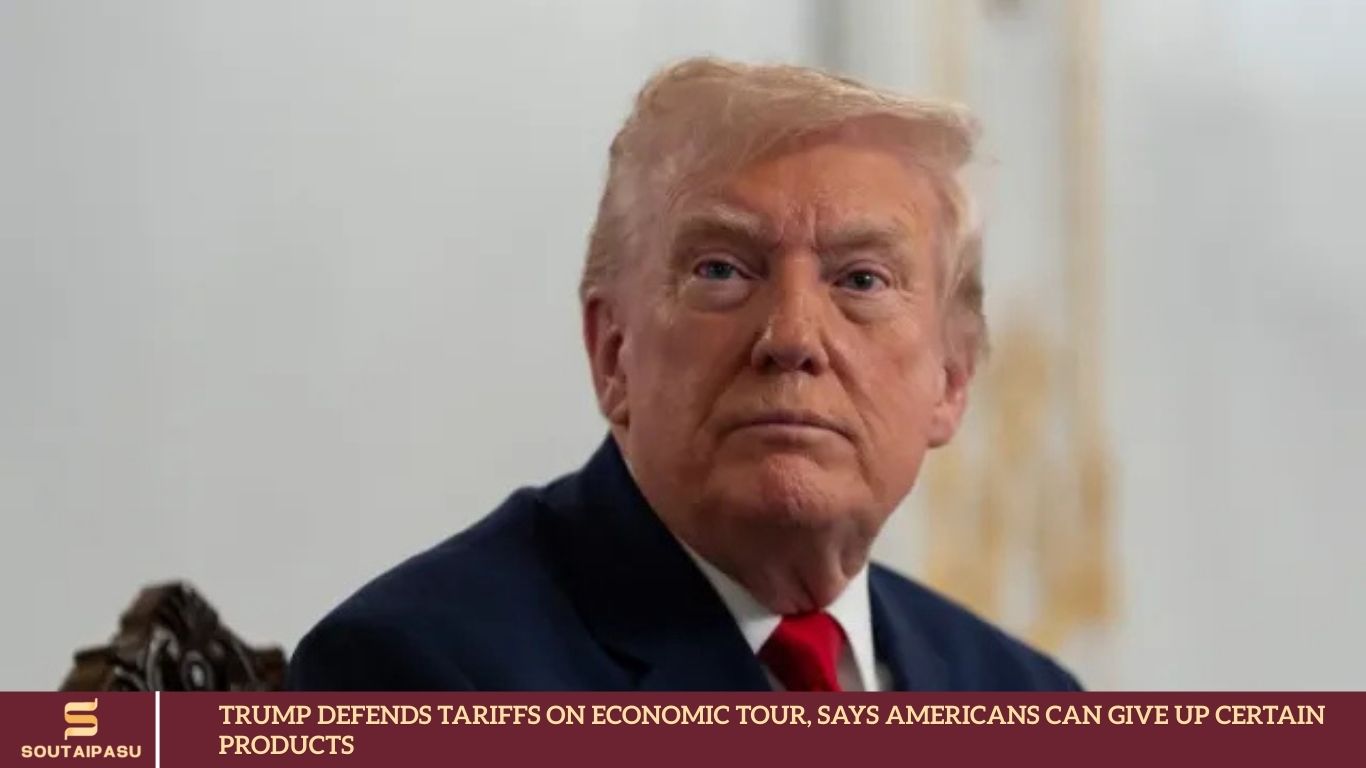
Under the slogan “Lower Prices, Bigger Paychecks,” Trump launched the first stop of his new economic tour in Mount Pocono, Pennsylvania. His speech comes at a time when polls show Americans are increasingly worried about the rising cost of living.
Addressing supporters, Trump said Democrats consistently create “a hoax,” dismissing their claims that his policies contributed to inflation. “The new word is ‘affordability,’” he remarked, mocking the criticism. He added, “Democrats say prices are too high; well, they’re too high because they caused them to be too high. But now they’re coming down.”
At another point, Trump acknowledged that affordability itself isn’t a hoax, admitting that prices had become too high. “I can’t call affordability a hoax because they’ll twist that,” he said.
Throughout the 90-minute address, Trump emphasized that his favorite economic tool remains tariffs. He credited his trade measures with generating “hundreds of billions of dollars” in revenue for the government. He also argued that Americans could simply forgo certain goods, saying, “You can give up certain products. You could give up pencils. Under the China policy, every child gets 37 pencils, but they only need one or two.”
Despite his strong defense of tariffs, Trump has rolled back several of his earlier trade duties, particularly those imposed on April 2. Tariffs remain elevated compared with decades past, but the sweeping 25% tax that once applied to all imports from Mexico and Canada was later scaled back to exempt items covered by the USMCA. Tariffs on Chinese imports previously more than 100% have been reduced to a standard 10% rate applied across countries. Trump also loosened tariffs on a variety of food products, including beef, coffee, bananas, and tomatoes, to ease grocery costs.
Even with these changes, many of the remaining tariffs continue to influence consumer prices. An October report from the Federal Reserve Bank of St. Louis found that tariff actions are already putting noticeable upward pressure on prices, based on data from January through August. The study noted that while the full cost impact hasn’t yet materialized, this may be due to delayed price adjustments, competitive pressure, or expectations that the tariffs could be temporary.
Trump’s remarks come as consumer confidence remains historically low. The University of Michigan’s consumer sentiment index fell to 51 points in November, the second-lowest level since the survey began in 1952, surpassed only by a reading of 50 in June 2022. Earlier that day, in a Politico interview, Trump gave his own economic performance a grade of “A-plus-plus-plus-plus-plus.”
Meanwhile, Democrats are increasingly focusing their pre-2026 messaging on affordability, tying rising costs directly to Trump’s tariffs and trade strategy. New York City’s mayor-elect, Zohran Mamdani, who recently met with Trump, won his election on a platform centered almost entirely around improving affordability for residents.
Has Trump’s tariffs Helped the US Economy
The impact of Trump’s tariffs on the U.S. economy remains a subject of sharp debate. Supporters argue that the tariffs helped protect American industries, encouraged domestic manufacturing, and generated billions in government revenue. However, economists point out that many of these tariffs also raised costs for businesses and consumers, contributing to higher prices on everyday goods. While some sectors, such as steel and aluminum, saw short-term gains, broader data suggest that the overall economic benefits were mixed. In fact, several studies, including analyses from Federal Reserve researchers, indicate that tariffs added upward pressure to consumer prices and strained supply chains. As a result, the question of whether Trump’s tariffs truly strengthened the U.S. economy depends mainly on which industries are being evaluated and how consumers weigh the trade-offs between protectionism and affordability.
Would Trump’s tariffs Weaken the Dollar
Trump’s tariffs could weaken the U.S. dollar, but the effect is not guaranteed and depends on how markets react. Tariffs generally raise the cost of imported goods, which can push inflation higher. When inflation rises, the purchasing power of the dollar naturally weakens. At the same time, tariffs can reduce global demand for U.S. goods if other countries retaliate, leading to fewer U.S. exports and putting downward pressure on the dollar.
However, the opposite can also happen. If tariffs reduce imports more than they reduce exports, the trade deficit may shrink, which can strengthen the dollar. In addition, if investors view the U.S. as economically resilient despite tariffs, capital inflows may increase, which supports a stronger currency.
Economists generally agree on this pattern:
- Short term: Tariffs often increase inflation and uncertainty, which tends to weaken the dollar.
- Long term: Currency effects depend on trade balances, interest rates, and whether other countries impose counter-tariffs.
Significant Tariffs Introduced Under Trump
Trump introduced tariffs across several major categories, each with significant economic implications.
China Tariffs (Section 301)
The most impactful tariffs were imposed during the trade war with China. The U.S. imposed tariffs of 10% to 25% on more than $360 billion in Chinese goods, including electronics, machinery, clothing, and household items.
Steel and Aluminum Tariffs (Section 232)
A 25% tariff on steel and a 10% tariff on aluminum were enacted to revive American metal production. These tariffs applied to several countries, though some later received exemptions.
Tariffs on Mexico and Canada
Envisioned initially as broad 25% tariffs, they were later scaled back as part of the USMCA deal. Still, the threat of these tariffs was central to negotiations.
Product-Specific Tariffs
Targeted tariffs were placed on solar panels, washing machines, and various agricultural products to shield domestic industries from foreign competition.
How Did Trump’s Tariffs Affect the U.S. Economy?
The economic impact of Trump’s tariffs remains heavily debated. While some industries benefited, others and ultimately consumers felt financial strain.
Higher Prices for Consumers
Because tariffs are taxes on imports, many companies passed the increased costs down to consumers. This drove up the price of everyday items, from electronics to household goods. Several reports, including studies from the Federal Reserve, found measurable inflation pressures linked to these tariffs.
Mixed Results for Manufacturing
Some U.S. manufacturers, particularly in steel and aluminum, temporarily benefited from reduced foreign competition. However, industries relying on imported parts, such as automotive and electronics, faced higher production costs, limiting their competitiveness.
Trade Partners Retaliated
Countries like China and the EU responded with tariffs of their own on U.S. exports. This particularly hurt American farmers, prompting the government to issue billions in aid to offset lost agricultural income.
Government Revenues Increased
Tariffs generated billions of dollars in additional revenue for the U.S. Treasury. Trump frequently highlighted this as a sign of success, though economists noted that consumers and businesses ultimately bore most of the costs.
Have Trump’s Tariffs Been Rolled Back?
Although some tariffs were modified or removed in later years, especially those affecting groceries and specific industries, many of Trump’s trade measures remain in place. Several of these tariffs have become a long-term part of U.S. trade policy, even under new administrations.
This continuity suggests that the economic and political motivations behind tariffs extend beyond Trump, reflecting broader concerns about supply chains, global dependency, and national security.
The Lasting Legacy of Trump’s Tariffs
Trump’s tariffs fundamentally reshaped U.S. economic strategy. They revived discussions about fair trade, exposed vulnerabilities in global supply chains, and pushed both political parties to reconsider America’s role in the worldwide economy. While the tariffs brought benefits to some industries, they also contributed to higher prices and trade tensions.
Ultimately, the legacy of Trump’s tariffs lies in their boldness: they challenged long-standing trade norms, forced renegotiations, and shifted public expectations about protecting American industry. Whether they helped or hurt the economy depends mainly on which sectors are evaluated and how Americans weigh the trade-off between protectionism and affordability.
Frequently Asked Questions
What are Trump’s tariffs?
Trump’s tariffs are taxes imposed on imported goods during his presidency to protect U.S. industries, reduce trade deficits, and pressure countries, especially China, to change unfair trade practices.
Why did Trump introduce tariffs?
Trump introduced tariffs to strengthen American manufacturing, reduce reliance on imports, and negotiate better trade deals for the United States.
Did Trump’s tariffs raise prices for consumers?
Yes. Multiple studies show that Trump’s tariffs increased the cost of imported goods, contributing to higher prices for everyday items for U.S. consumers.
How did Trump’s tariffs affect China?
The tariffs targeted hundreds of billions of dollars in Chinese goods, pressuring China to change trade policies and leading to a partial trade agreement known as the “Phase One” deal.
Are Trump’s tariffs still in place?
Many of Trump’s tariffs, especially those on China and steel, remain active today. Some were modified, but most are still part of the current U.S. trade policy.
Did Trump’s tariffs help the U.S. economy?
The results were mixed. Some industries benefited from reduced foreign competition, but tariffs also increased consumer prices and led to retaliation from other countries.
Conclusion
Trump’s tariffs marked one of the most significant shifts in U.S. trade policy in decades, reshaping how America engages with global markets. While the tariffs provided short-term protection for specific industries and generated substantial government revenue, they also contributed to higher consumer prices and triggered retaliation from key trading partners. The overall economic impact remains mixed, beneficial for some sectors yet challenging for others. What is clear, however, is that Trump’s tariff strategy sparked a broader national debate about supply chains, economic independence, and fair trade. As many of these tariffs remain in place, their long-term influence continues to shape U.S. monetary policy and discussions about America’s role in the global economy.